
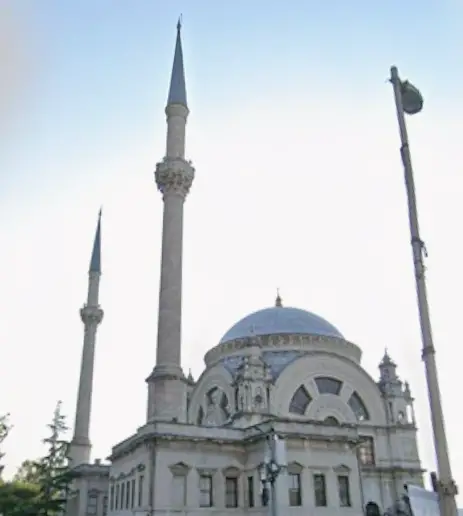
The construction of the Dolmabahçe Mosque began by the order of Bezmiâlem Valide Sultan. Following her passing in 1853, the project was completed by her son, Sultan Abdülmecid. Designed by the renowned architect Garabet Balyan, the structure’s original name is the Bezmiâlem Valide Sultan Mosque. It was officially opened for worship with a Friday ceremony in 1855.
Architectural Style and Structural Features
The mosque was built with a unique interpretation, blending Western styles such as Baroque, Rococo, and Empire with the established artistic heritage and aesthetic sensibilities of the period. The following details stand out in its architectural composition:
- Dome Structure: Distinct from classical Ottoman architecture, the dome is placed directly onto the walls. To prevent the walls from expanding outward under this weight, high, rectangular weight towers were positioned at the corners.
- The Sultan’s Pavilion (Hünkar Kasrı): The front facade of the mosque, rising with exquisite stone and marble craftsmanship, is occupied by a two-story Sultan’s Pavilion that projects outward from both sides. The pavilion consists of two “L” shaped wings on the sides and a central volume positioned further back.
- Minarets: Designed independently from the main body of the mosque, the minarets rise from the two corners of the pavilion. Notable for their slender, tall forms and fluted shafts, the sections beneath the minaret balconies (şerefe) are adorned with acanthus leaves.
Interior Design and Decorations
The mosque is entered through the foyer of the Sultan’s Pavilion. As in the rest of the pavilion, a very bright and spacious atmosphere prevails in the interior, thanks to the numerous windows.
The floor of the prayer hall (harim) is paved with large red bricks. The interior of the dome and the pendants are entirely decorated in a Western style with gilded and oil-painted hand-drawn motifs. The mihrab and minbar, which showcase distinguished examples of colored marble craftsmanship, move away from classical lines to focus on Baroque-style ornamentations.
Historical Process
Between 1948 and 1961, the structure, along with the Sultan’s Pavilion, served as the Naval Museum. After the museum moved to its new building, the mosque was restored and reopened for worship.