
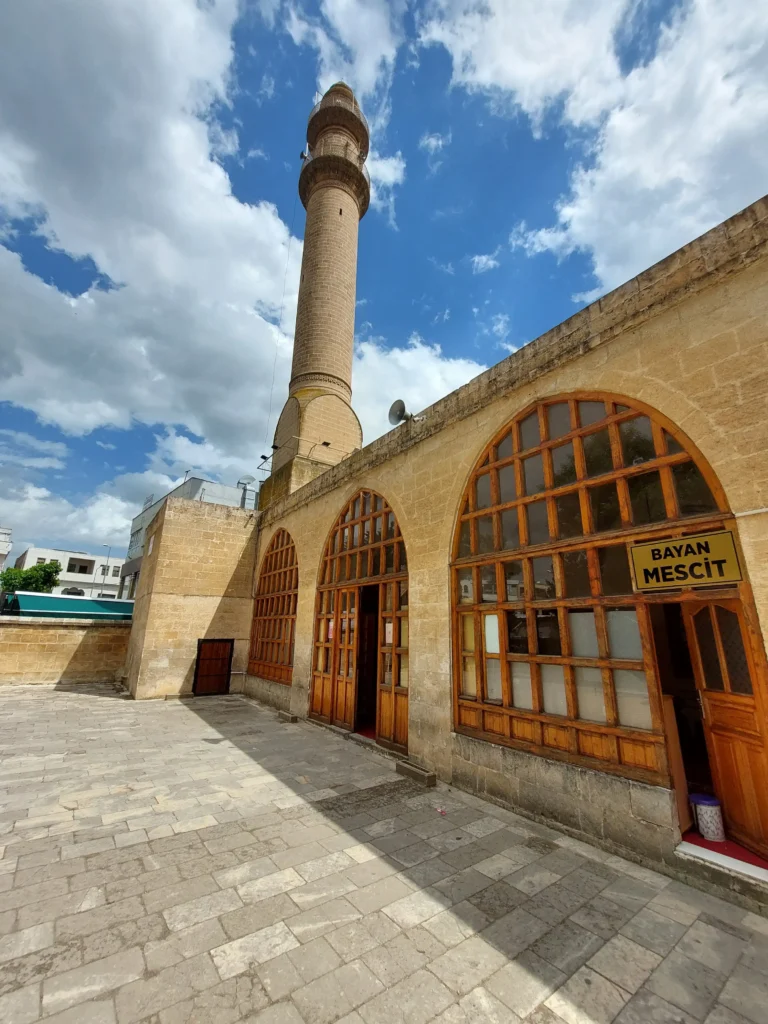
Located in the Midyat district of Mardin—a major focal point for cultural tourism—the Cevat Pasha Mosque stands out for its authentic architectural design and fine yellow cut-stone masonry. It remains one of the must-see heritage landmarks in the heart of the district, reflecting the region’s rich multicultural history.
History of Cevat Pasha Mosque
As stated on the official inscription plaque at the entrance gate and in archival records, the mosque was built in 1925. Initiated under the leadership of Cevat Pasha, who served in the region, the structure was built to meet the religious needs of the local Muslim community. Muslim and Syriac stonemasons worked together during its construction, leaving a cross-cultural artistic mark on the building’s intricate relief work.
Architectural Features
Designed in harmony with traditional Mesopotamian stone architecture, the structure combines aesthetic appeal with functional durability:
- Katori (Midyat) Stone: The entire mosque was constructed using local yellow limestone, known locally as “Katori.” Easily carved when freshly quarried but hardening over time upon exposure to air, this material naturally keeps the interior cool during summer and warm in winter.
- Stone Carvings and Motifs: Prominent motifs carved into the window frames and arch surfaces include grape clusters, vine leaves, and geometric patterns, showcasing the refined skill of local craftsmen.
- Roofing and Minaret: Supported internally by cross vaults, the building is roofed externally with a dome resting on a polygonal drum. Its cylindrical minaret features fine decorative stone work along its shaft.